.avif)

Haukadalur Valley is a geothermal area in southwest Iceland, approximately 100 kilometers northeast of Reykjavík, renowned as the home of the world's most famous geysers. The valley sits within the larger Haukadalur geothermal field, where underground magma chambers heat groundwater to create spectacular surface eruptions.
The English word "geyser" derives from Geysir, the valley's original great geyser that gave its name to all similar phenomena worldwide. Historical records document Geysir's activity since 1294, when earthquakes may have triggered its formation. The feature erupted regularly for centuries, sometimes reaching heights of 70 to 80 meters, making it one of the most powerful geysers ever recorded.
Geysir became largely dormant by the 1960s, with earthquakes occasionally reactivating brief eruption periods. However, Strokkur (meaning "the churn"), located just 50 meters from Geysir, erupts reliably every 5 to 10 minutes, shooting boiling water 15 to 30 meters into the air. You can witness the entire eruption cycle as water swells in the opening, forming a distinctive blue bubble before exploding upward.
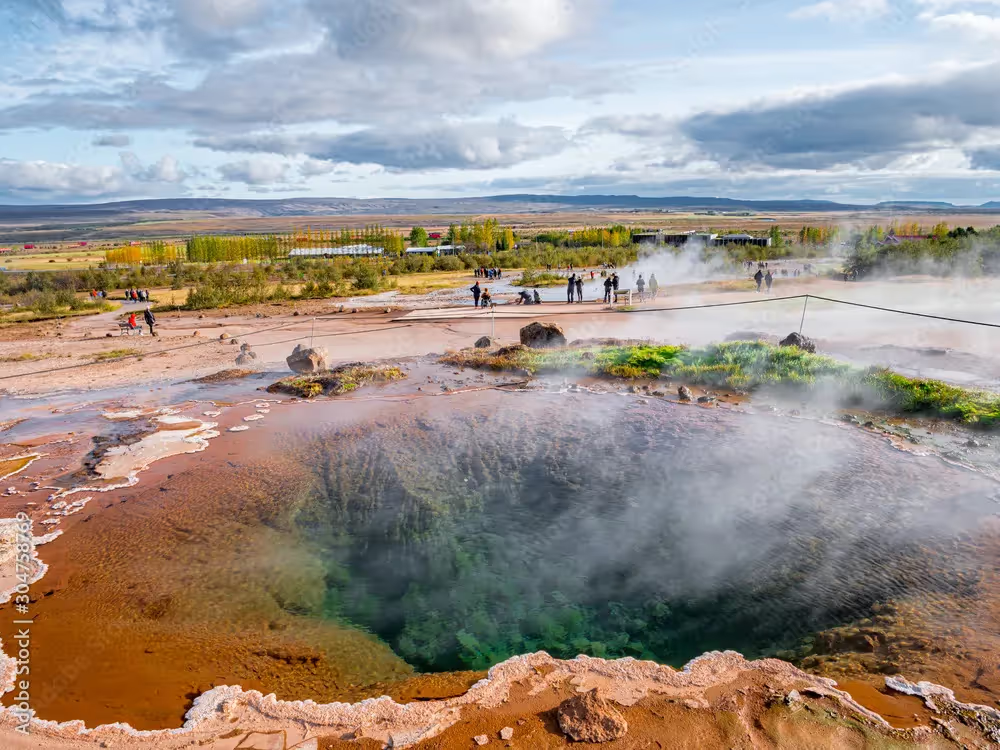
The valley contains numerous additional hot springs, fumaroles, and mud pools spread across the colorful geothermal field, where mineral deposits create orange, yellow, and white patterns across the terrain. Steam vents hiss continuously, and you'll observe water temperatures reaching 100 degrees Celsius in various pools.
The Haukadalur geothermal area became one of Iceland's first major tourist attractions in the 18th and 19th centuries, when visitors traveled by horseback to witness Geysir's eruptions. The site gained protection as a natural reserve and remains one of three key stops on the Golden Circle route, alongside Þingvellir National Park and Gullfoss waterfall. The valley sits approximately 10 kilometers southwest of Gullfoss and 60 kilometers northeast of Þingvellir, making it an essential component of Iceland's most popular day tour.
You can explore the geothermal field via marked walking paths that loop through the main features, requiring approximately 45 minutes to one hour for a complete circuit. The main path brings you close to Strokkur's eruption zone, and you'll want to position yourself upwind to avoid scalding spray.
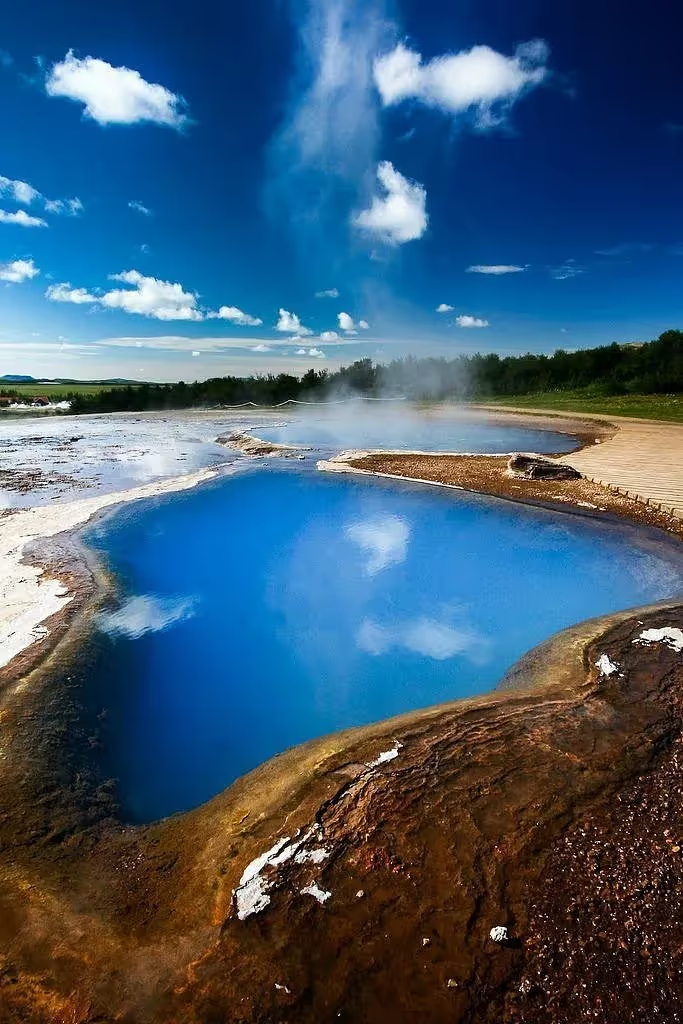
Several smaller hot springs display beautiful blue coloration, though warning signs emphasize the danger of approaching or touching any thermal features. The Haukadalur visitor center, opened in 2012, includes exhibitions on geothermal geology, a restaurant serving traditional Icelandic cuisine, and a gift shop. The modern facility can accommodate over 1,000 visitors simultaneously during peak periods.
You can reach Haukadalur via Route 35 from Reykjavík, with the drive taking approximately 90 minutes through agricultural lowlands before ascending to the geothermal plateau. The valley lies along the standard Golden Circle route, and virtually every tour operator offers day trips including this site. Reykjavík Excursions and other bus companies provide scheduled services during summer months.
Haukadalur Valley is a geothermal area in southwest Iceland, approximately 100 kilometers northeast of Reykjavík, renowned as the home of the world's most famous geysers. The valley sits within the larger Haukadalur geothermal field, where underground magma chambers heat groundwater to create spectacular surface eruptions.
The English word "geyser" derives from Geysir, the valley's original great geyser that gave its name to all similar phenomena worldwide. Historical records document Geysir's activity since 1294, when earthquakes may have triggered its formation. The feature erupted regularly for centuries, sometimes reaching heights of 70 to 80 meters, making it one of the most powerful geysers ever recorded.
Geysir became largely dormant by the 1960s, with earthquakes occasionally reactivating brief eruption periods. However, Strokkur (meaning "the churn"), located just 50 meters from Geysir, erupts reliably every 5 to 10 minutes, shooting boiling water 15 to 30 meters into the air. You can witness the entire eruption cycle as water swells in the opening, forming a distinctive blue bubble before exploding upward.
The valley contains numerous additional hot springs, fumaroles, and mud pools spread across the colorful geothermal field, where mineral deposits create orange, yellow, and white patterns across the terrain. Steam vents hiss continuously, and you'll observe water temperatures reaching 100 degrees Celsius in various pools.
The Haukadalur geothermal area became one of Iceland's first major tourist attractions in the 18th and 19th centuries, when visitors traveled by horseback to witness Geysir's eruptions. The site gained protection as a natural reserve and remains one of three key stops on the Golden Circle route, alongside Þingvellir National Park and Gullfoss waterfall. The valley sits approximately 10 kilometers southwest of Gullfoss and 60 kilometers northeast of Þingvellir, making it an essential component of Iceland's most popular day tour.
You can explore the geothermal field via marked walking paths that loop through the main features, requiring approximately 45 minutes to one hour for a complete circuit. The main path brings you close to Strokkur's eruption zone, and you'll want to position yourself upwind to avoid scalding spray.
Several smaller hot springs display beautiful blue coloration, though warning signs emphasize the danger of approaching or touching any thermal features. The Haukadalur visitor center, opened in 2012, includes exhibitions on geothermal geology, a restaurant serving traditional Icelandic cuisine, and a gift shop. The modern facility can accommodate over 1,000 visitors simultaneously during peak periods.
You can reach Haukadalur via Route 35 from Reykjavík, with the drive taking approximately 90 minutes through agricultural lowlands before ascending to the geothermal plateau. The valley lies along the standard Golden Circle route, and virtually every tour operator offers day trips including this site. Reykjavík Excursions and other bus companies provide scheduled services during summer months.
Haukadalur Valley is a key stop on Iceland's Golden Circle route. It is easily accessible by car or as part of a guided tour from Reykjavik, located about 100 kilometers (62 miles) away.
Nearby attractions include Gullfoss Waterfall, Thingvellir National Park, and the Kerid Crater, all of which are part of the Golden Circle and can be visited on the same day.
The Great Geysir is mostly dormant and erupts very infrequently. However, the nearby Strokkur geyser erupts regularly and is a reliable spectacle for visitors.
Visitors should wear comfortable walking shoes and dress in layers, as the weather can change rapidly. A rain jacket is recommended due to the steam and water spray from the geysers.
Yes, Haukadalur Valley is accessible year-round, including winter. The geothermal activity keeps the area relatively snow-free, but icy conditions may be present on walkways, so caution is advised.
Why should you?